
On 29 December 1940, almost a full year before entering WW II, U.S. President Franklin Roosevelt called America the “Arsenal of Democracy.” The phrase was an evocation that with Europe at war, the United States would build, sell, lend, or lease the democracies fighting Nazism and Fascism, the weaponry required to defeat their enemies. Americans did not fully support their president’s decision until the attack on Pearl Harbor dragged them out of their isolationist sleepwalk. They have worn that moniker like a badge of honour ever since, and the rest of the world stood in line to buy US military hardware. Not anymore.
The current administration has all but destroyed, or in the president’s words “totally annihilated” the willingness of foreign powers to buy American. Increasingly, the weapons do not perform as advertised and the waiting lines grow by the day. Even after purchasing, countries have been subjected to threats, both vague and pointed, that perhaps the US would not keep their contractual agreements regarding maintenance and upgrades. Failing to get upgrades or maintenance packages for your PC may diminish is efficiency; if we are talking about fighter aircraft, or radars, it may make them little more than expensive scrap.
So what are countries to do? South Korea has demonstrated that in less than a decade, a country with an educated workforce and a willingness to be cooperative can become a global player in the armaments industry. Is there a lesson to be learned? Yes.
Canada has a highly educated and highly skilled workforce that already builds military hardware the world wants. We designed and now build one of the most highly desired wheeled armoured vehicles (the Light Armoured Vehicle). The LAV is the framework vehicle for a whole family of systems. We have an exceptionally developed aerospace manufacturing sector that builds a full range of products and leads the world in certain types of aerospace simulation systems. We have begun to recapture our expertise in shipbuilding after decades of leaving it barely alive. The conclusion should be obvious: Canada can help re-arm Europe.
Let me back up a half-step. I am not suggesting that we could develop, build and sell fighters, tanks, destroyers, artillery or other such combat platforms from a standing start. But neither do we need to. We already have deep strategic partnerships with the European Union. Canada recently became the ONLY non-EU country allowed to join the Comprehensive Economic and Trade Agreement (CETA), a major trade coup. We also participate in the Permanent Structured Cooperation agreement for military mobility, and most importantly, Canada has successfully negotiated and concluded its participation in the European Union’s €150-billion Security Action for Europe (SAFE) defence procurement program, marking a major strategic shift in its defence policy.
Those are pre-conditions. So what comes next? Canadian companies, already accustomed to working with licence agreements and multilingual and multicultural partners, signs agreements with European arms manufacturers whose order books are full and who want to step-up production. We are already doing so with Saab. We could expand that agreement and build stronger affiliations with companies Like Kraus-Maffei or perhaps even Dassault, the French aircraft manufacturer which makes the Rafale, a popular fighter which Dassault cannot make fast enough. And we do not need to build the entire systems. We could expand our production lines to build critical high-tech components. Steel, aluminum, nickel and electronics are all industrial strengths that we have. Our shipyards, with sufficient European investment, could be expanded to help with building seaborne drones and other auxiliary capabilities that would not diminish our own need to rebuild the Royal Canadian Navy.
Undoubtedly, there are many more niches and products that we could assist in that I have not mentioned. The list, I am sure, is long. During WW II, we trained more pilots than anyone in the world. It may be time for us to re-imagine our status, shake off our inferiority complex and, as the Brits say, “seize the nettle.”
Canada has the workforce, the brainpower, industrial capability and the untapped natural resources to achieve this aim. Let’s play to our strength of being a multilingual, multicultural, intelligent and open society.
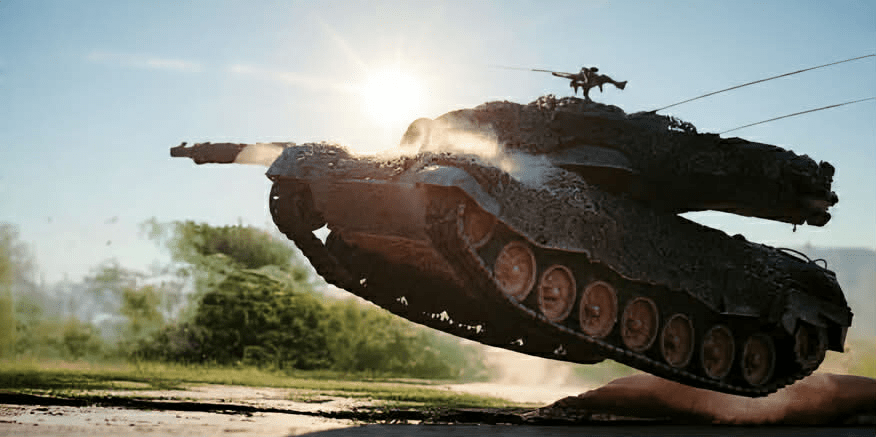
PS: My thanks to my 8CH Regimental brother Terry Sager for the photo!
 The Enlightened Soldier