
If you have read my novel The Cohort: Trust and Betrayal, then you know how strongly I feel about this issue. As the marketing pitch on the novel’s back cover points out:
“Skip is a man committed to the ancient principles imparted to him by his father: trust, friendship and honour. He surrounds himself with friends, both old and new, who share those same beliefs. But even in Eden there was a snake, and betrayal threatens this new life of brotherhood and fraternal fidelity that he creates.”
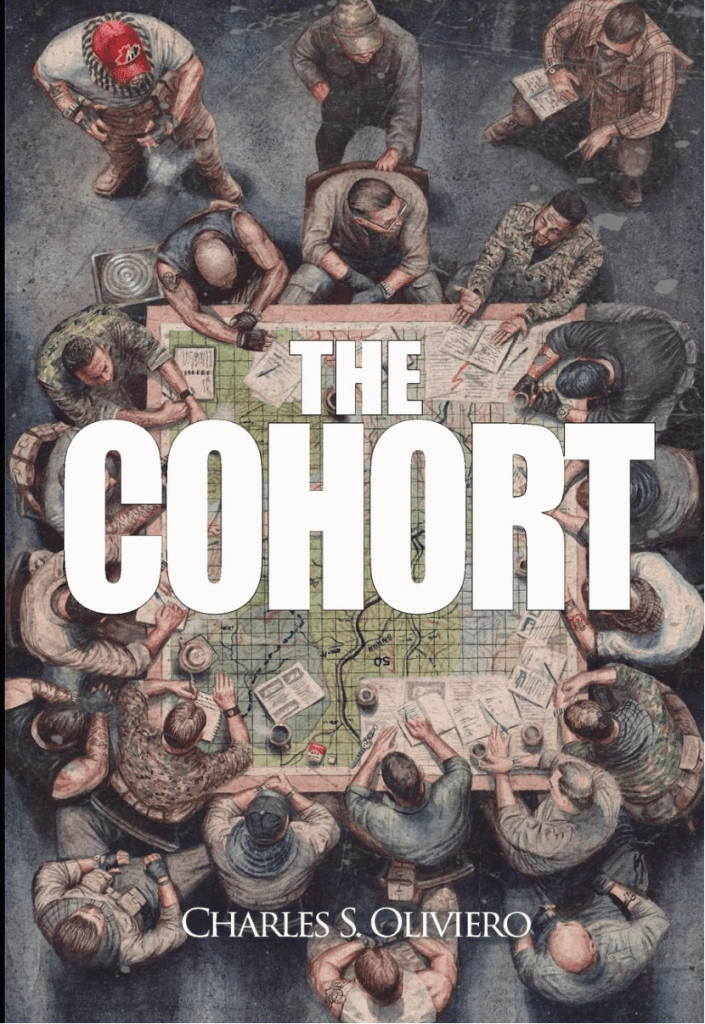
I have been writing about trust and leadership since the ‘80s so this isn’t new. I wrote Cohort a couple of years ago, but the lesson could not be more applicable than it is today. The protagonist is a Canadian who’s recruited by an American and together, through shared values, friendship both old and new, and mutual trust, they build an extraordinary, small, special operations unit. I cannot tell you how many of my friends and I can relate to this situation — not to mention the linkages of family, marriages, heritage and friendship. Contrary to what the press has touted, America’s “special relationship” was not with the UK. First and foremost, it was with Canada.
But what happens when a trusted friend, ally, and partner decides to betray you? No, I am not referring to my novel. I am referring to cross-border relations between Canada and the US. Americans are slowly beginning to discover exactly that. Tourism is down, bourbon sales have crashed, and whatever the president may believe, America very much needs Canadian lumber, oil, aluminum, and electrical power — and all of those things have become more expensive for Americans for no good reason. But there are non-Canadian repercussions to the current administration’s wounding of the trusted relationship.
Subaru has announced the closure of a major plant. Toyota has halted plans for expansion, as has Nissan and Hyndai. Sure, these are foreign automakers, but they built vehicles in US states and added enormously to the US economy. Europeans have shifted business away from the US (albeit subtly) and towards Asia and even towards Canada. Generally speaking, trust in America has been shaken and as any serious economist will tell you, capital craves security and trust. If you have capital to invest, you tend to shy away from untrustworthy partners.
Although automobile manufacturing may be front and centre in this issue, it’s about much more. It’s about uncertainty and it spills across multiple domains, including the one that seems to be uppermost in the psyche of many Americans: national security. As the band .38 Special’s hit from the 80s warned prophetically “hold on loosely, but don’t let go/if you cling too tightly, you’re gonna lose control.” The more the current American administration tightens its grip, the more the global economy that it once dominated for its own benefit seems to slip away. A national security paradox.
Let’s move from rock ‘n’ roll back to military theory to end. In his timeless Art of War Sun Tzu warns that enemies with alliances are strong but anyone with no alliances is weak and so you should seek to form alliances. That presupposes that the allies you seek will trust you. NATO has, from its first day of existence, counted on US support and leadership. That support and leadership has been slowly eroding in minor but significant ways. As I have discussed previously, France, Germany and even Poland are preparing for the possibility of an American withdrawal from NATO and although most of the NATO partners will be saddened should this happen, some will not and the strongest of the powers will seize such a mistake as an opportunity.
Hope is not a method, and panic is not a plan. The off-year elections that occurred on 4 Nov in many states has demonstrated that perhaps the Silent Majority has seen what retribution politics brings and have been shocked back into realizing that somewhere between the Looney Left and the MAGA Right, lies where most Americans, the nation that saved the world for democracy, is most comfortable.
Rebuilding the relationship that we have enjoyed for generations begs to be rebuilt. Let us hope that leaders on both sides of the border can see their way clear to do so, for everyone’s benefit.
 The Enlightened Soldier